Style
What to Wear to a Wedding as a Guest: Dress Codes Explained
The invitation tells you more than most guests read, and the venue tells you the rest.
Wedding guest dress codes run from black tie to outdoor casual. Follow the code printed on the invitation, match the fabric and layers to the season, and avoid white or anything that competes with the couple. The venue is a reliable guide when the invitation is silent.
Start with the invitation
Wedding invitations often print a dress code in small type at the bottom, or on a separate card. Treat that line as the rule. "Black tie" means a formal evening look, "cocktail" means a dressy knee-length or midi outfit, "semi-formal" means polished but not formal, and "casual" or "outdoor" means comfortable clothes that still look considered.
If there is no dress code, read the rest of the invitation. A formal printed design, an evening start time or a hotel address points to a dressier event. A handwritten note or a farm location suggests a relaxed approach.
Use the guest look tool
The selector below gives a starting point for the most common dress codes and seasons. It is a suggestion, not a rule, and it does not replace checking with the couple if you are unsure.
Wedding guest look
Pick the dress code on the invitation, then the season.
Black tie
Black tie calls for a floor-length gown or a long, fitted midi in deep colours such as emerald, midnight blue, burgundy or plum. Satin, crepe and velvet suit the formality. Choose polished heels or evening sandals, and a clutch or small structured bag.
Keep the day-wear pieces at home. A tailored jumpsuit can work in a modern venue, but check that it reads as formal rather than practical before you commit.
Cocktail
Cocktail is the most flexible code. A knee-length or midi dress in a rich colour, a tailored jumpsuit, or a skirt with a silk blouse all work. Pick heels or dressy flats, and add one clear accessory such as statement earrings or a metallic clutch.
Cocktail dresses suit evening events well, so consider the time of the ceremony before choosing a daytime option with a very short hemline.
Semi-formal
Semi-formal gives you the most room for personal style. A midi dress, a pleated skirt with a fitted top, or tailored trousers with a blazer all look right. Choose closed shoes if the venue is a church, a garden with uneven ground or a historic building.
Outdoor or casual
Outdoor weddings call for fabrics that breathe and shoes that cope with grass or gravel. A light cotton or linen midi, a sundress with a cardigan for the evening, and block heels or flats are the usual choices. Avoid stiletto heels on lawns, which sink and leave marks.
Choose by season
Summer weddings favour light fabrics such as cotton, linen, crepe and chiffon, in colours that show well in bright light. Keep a light layer for the evening, since temperatures often drop after sunset.
Autumn and winter weddings allow for heavier fabrics, such as velvet, wool crepe and satin with a fleece lining. Bring a wrap or a tailored coat, and choose opaque tights or fully covered legs if the venue is cold.
Spring weddings are often mixed. Dress for the warmer part of the day and plan for an evening layer.
Colours and details to avoid
- White, ivory and cream are reserved for the bride in most traditions. Pale neutrals can work if they are clearly a different shade, but check the invitation first.
- Anything that competes with the bride is a common mistake. Avoid very long trains, heavy sequins and bridal-style lace unless the couple asks for a bold guest look.
- Clothes that are too casual for the code. Denim, sneakers and visible logos rarely suit a formal or cocktail event, even if the outfit is well chosen.
Checklist before the day
- Confirm the dress code and the venue type.
- Check the weather forecast for the ceremony and evening.
- Test the shoes for a full evening. Heels that hurt after an hour will change how you look and feel for the rest of the event.
- Pack a small emergency kit with a safety pin, spare tights and stain wipes.
- Plan transport and check whether the venue has a dress-code rule for the reception.
Two guest looks, planned from the invitation
Consider a wedding in October at a country estate, with a ceremony at three in the afternoon and dinner at seven. The invitation says "cocktail" and the venue is outdoors on a lawn, with a marquee for the evening.
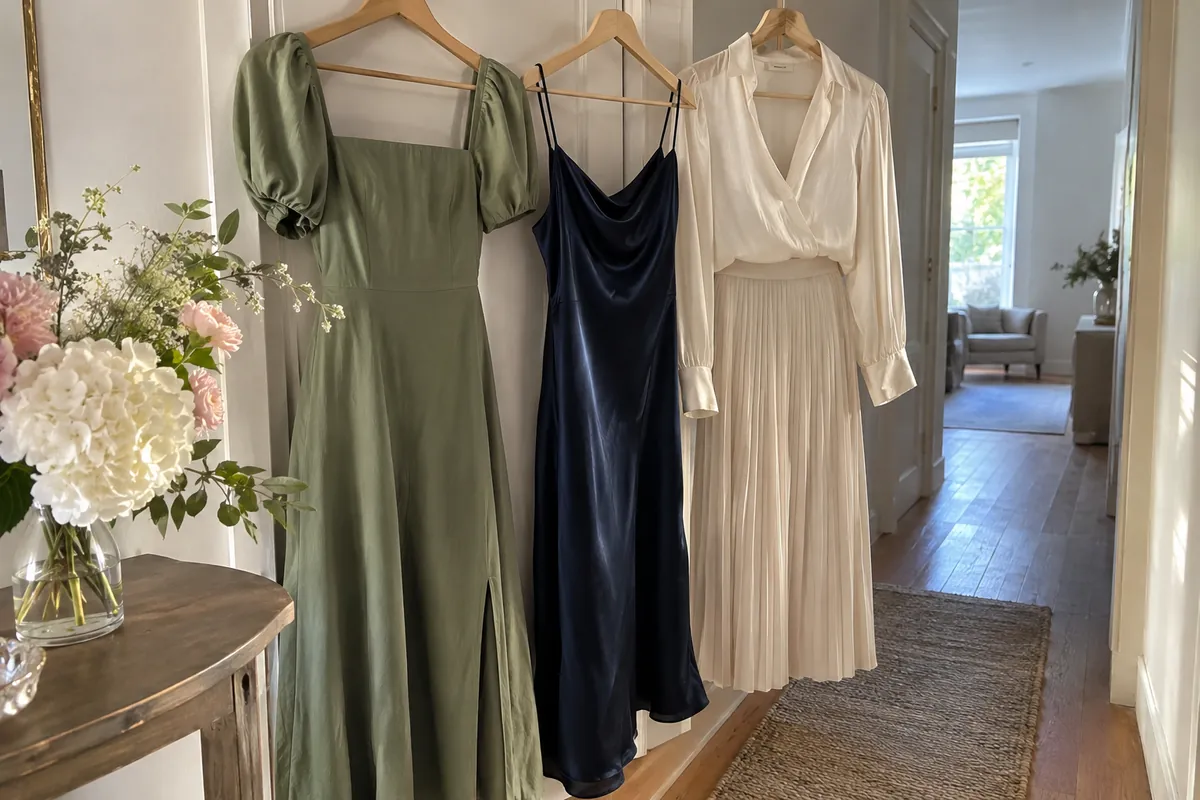
A sensible plan starts with the dress code and the venue together. A midi dress in a deep green or a rust tone suits cocktail dress code, and it is warm enough for an autumn evening once you add a tailored coat. Choose block heels, since a stiletto will sink into grass. Bring a small clutch and a light wrap for the marquee, where it can get cool after dark.
A second look for the same event could be a tailored jumpsuit in navy with a silk blouse, flat ankle boots and a structured coat. Both looks meet the code, both are practical for the venue, and both can be worn to other events afterwards, which is the test that matters for the cost.
Frequently asked questions
What if I cannot find a dress that matches the code?
Start with the code, then choose one element that is formal, such as a satin blouse, a structured jacket or a dressy shoe. The outfit will look intentional even if the rest of it is familiar.
Should I ask the couple about the dress code?
Yes, when the invitation is unclear. A short message to a friend in the wedding party is normal and shows that you care about the event.
Can I wear a jumpsuit?
Often, yes, unless the invitation says black tie and the venue is very traditional. A well-tailored jumpsuit in a rich colour can be the right choice for a cocktail or semi-formal event.
How much should I spend on a wedding outfit?
Choose a budget you can use again. A dress that works for other events is better value than a single-use outfit. The cost per wear guide explains how to compare options.
Related reading
For shoes that will get you through a long reception, read how to choose heels you can walk in. For colour choices near your face, the undertone guide helps you choose the right shade.