Style
Skin Undertone: How to Find the Colours That Suit You
Undertone is the subtle colour beneath your skin's surface, and it does not change when you tan.
Skin undertone is the subtle cool, warm or neutral tone beneath your skin's surface, and it stays the same when you tan. Check your veins, your jewellery preference and your reaction to sun, then choose the palette that matches your result.
Undertone is not the same as skin tone
Skin tone is how light or dark your skin looks, and it changes with sun exposure, season and age. Undertone is the colour underneath: cool (pinkish, blue or rosy), warm (golden, peachy or yellow) or neutral (a balance of both, or an olive cast). Undertone stays put, which is why it is the right reference when you choose colours.
Knowing your undertone helps with three everyday decisions: which neutrals look fresh rather than tired, which jewellery metal flatters you, and which makeup shades blend without a visible line. It does not decide what you are allowed to wear.
Test your undertone at home
No single test is perfect, so the quiz below combines three signals. Use natural daylight, not a warm bulb or a phone screen, and do not wear strong makeup for the test.
Undertone quick test
Use natural daylight. This is a guide, not a medical or colour-analysis service.
The draping test
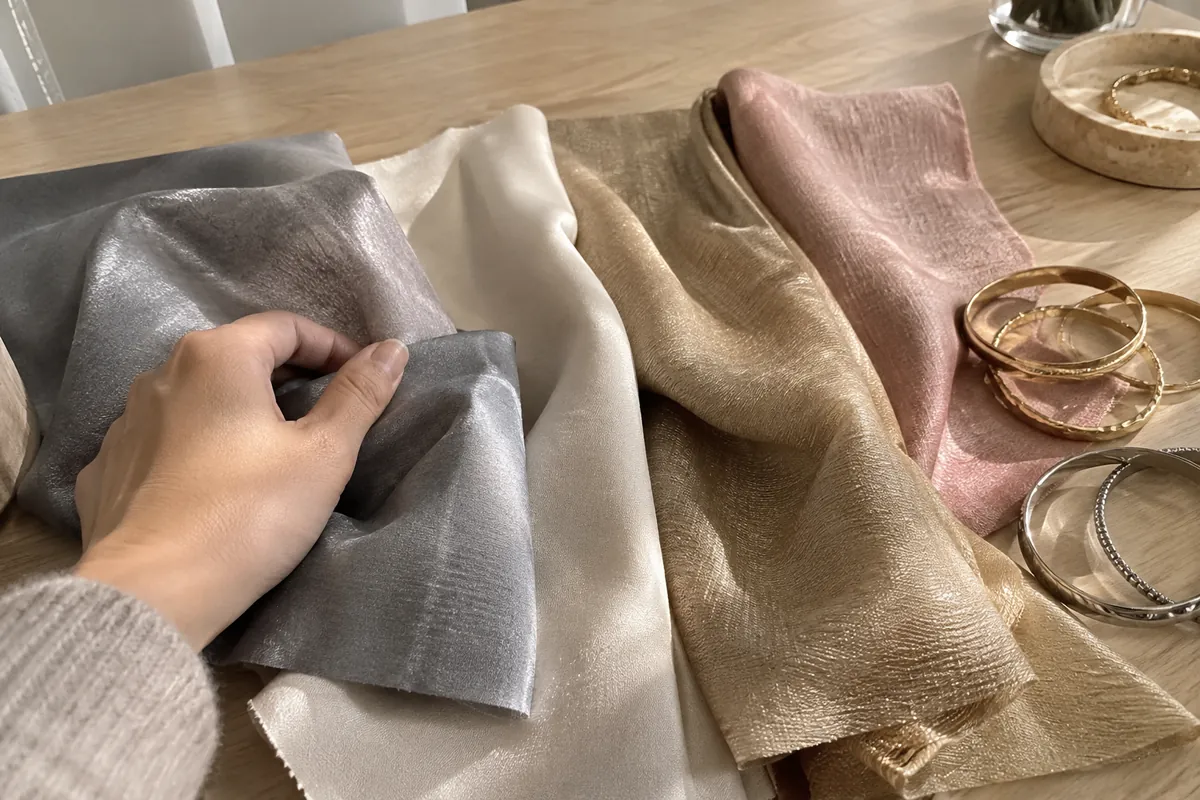
If the quiz result is unclear, try draping. Choose two fabrics, one stark white and one cream or ivory. Hold each one against your face in daylight, a few centimetres below your chin, and look in a mirror.
The white usually makes cool undertones look bright and even, and it can make warm undertones look slightly grey or tired. Cream does the opposite: it often flatters warm skin and can make cool skin look yellowish. The fabric that makes your skin look even and clear is the closer match.
The three palettes
Cool undertone. Colours with a blue or pink base usually flatter you best. Think of true white, navy, plum, emerald, icy grey, raspberry and rose. Silver jewellery tends to look crisp against cool skin. Warm camel or mustard can look flat next to your face, though a small amount can still work.
Warm undertone. Golden and earthy tones are your strongest allies: ivory, cream, olive, terracotta, camel, mustard and chocolate. Gold jewellery usually looks richer. Stark black-and-white can look harsh, so soften it with cream or a warm brown.
Neutral or olive undertone. You have the most flexibility. Both silver and gold tend to work, and soft jewel tones, taupe, soft white and muted greens are easy to wear. Check your reaction to very bright colours, because intensity can overwhelm a neutral complexion more than either extreme.
Apply it to clothing
You do not need to wear only your palette. Use it to decide which shades sit closest to your face: tops, scarves, knitwear and the collar of a coat. Bottoms, shoes and bags can use a wider range without affecting how your face looks.
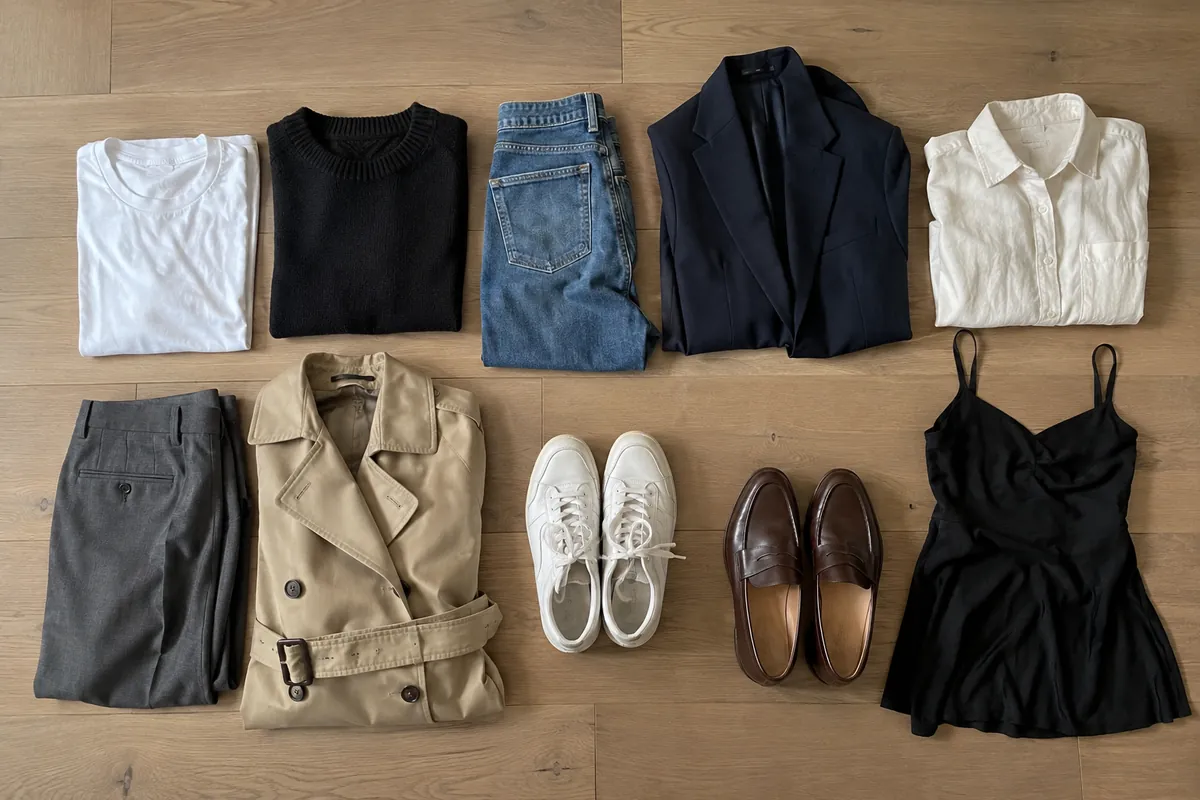
Start with neutrals. Choose the version of navy, grey or white that suits your undertone, and build the capsule around it. The capsule wardrobe guide explains how to set a colour base that works.
Apply it to makeup
Foundation and concealer are where undertone matters most. A shade with the wrong undertone can look grey or orange in daylight even when the depth is right. Test along the jawline in natural light, and choose the shade that disappears. If you are between two shades, the one with the slightly warmer or cooler base is usually more reliable than the one with the closer depth.
Blush, lipstick and eyeshadow follow the same logic: cool undertones suit pink and berry, warm undertones suit peach, coral and bronze, and neutrals can wear both.
Common mistakes
Confusing tan with undertone. A summer tan can make skin look warmer for a few weeks. The undertone is what remains underneath, so test when your skin is at its normal colour.
Trusting one signal. Veins are a useful clue but not a rule. Some people with green veins have cool skin, and vice versa. That is why the quiz uses three signals.
Treating colour analysis as a rule book. A palette is a guide to what flatters, not a list of colours you must avoid. Wear what you love and use undertone to adjust the shades closest to your face.
A worked example: buying a neutral coat
Imagine you need a new neutral coat and you are choosing between a stone grey and a camel. Both are flattering in the shop, but at home one looks slightly ashen against your face. Undertone explains why. A cool undertone often looks clean with a grey that has a blue base, while a warm undertone usually looks richer with camel.
The practical test is simple. Put the coat on in daylight with your usual top, and look at the area around your jaw and under your eyes. If the coat makes that area look even and bright, it suits you. If it makes you look tired or yellowed, choose the other shade, even if it is the one you expected to like less.
Apply the same method to scarves, knits and jewellery. Keep the colours closest to your face in your undertone family and let the rest of the outfit vary.
Frequently asked questions
Can undertone change with age?
Slightly, in many people, as skin thins and redness or yellowing shifts. Check again every few years, especially before buying foundation.
Does undertone affect eye colour choices?
It can. Warm undertones often suit brown, green and gold eyes with warm shadows, while cool undertones suit blue, grey and violet shadows. Use these as starting points rather than strict rules.
What if my skin reacts badly to colour tests?
Stop and do not force the test. Persistent redness or irritation from any product or fabric is a reason to see a doctor or dermatologist, not a reason to buy the wrong shade.
Is this the same as a professional colour analysis?
No. A professional colour consultation can include lighting, fabric and makeup tests in a controlled setting. This guide offers a quick home method that gets you most of the practical benefit.
Keep reading
Understanding colour works best alongside your skin care. Read the skin type guide to choose products that keep your complexion comfortable, and the personal style quiz to connect colour with shape.